Spiti Valley Road Trip Guide: Delhi–Manali–Kunzum Route, Tips & Itinerary
Spiti Valley Road Trip: The High-Altitude Adventure That Redefines What “Off the Grid” Really Means
There’s a moment on the road past Kaza, somewhere between Langza and Hikkim, when your phone signal disappears, the air thins out enough that you notice every breath, and the landscape turns into something closer to Mars than to anything you’ve seen in India before. That’s usually when people stop treating Spiti as a destination and start treating it as an experience they didn’t fully understand until they were standing in the middle of it.
I remember hitting that exact stretch during my own Spiti trip, driven from June 15 to June 19 — just four days on the road, starting out from Delhi and pushing all the way through Manali and Kunzum before finally rolling into the valley. Four days sounds tight on paper, and it was, but it also meant every single stop felt earned rather than rushed past.
If you’ve been scrolling through travel reels wondering whether Spiti Valley is worth the effort, the altitude sickness warnings, and the twelve-hour drives on roads that occasionally disappear into landslides — the honest answer is yes. But not in the polished, filtered way it usually gets sold to you.
This guide isn’t a repeat of the same ten Instagram spots you’ve already seen. It’s built from my own Delhi to Spiti Valley road trip — via Manali and Kunzum — with the mistakes, detours, and things nobody warned me about included.
Why Spiti Valley Has Become India’s Most-Searched Adventure Destination
Spiti sits in the rain shadow of the Himalayas, which means it barely gets monsoon rainfall while the rest of Himachal Pradesh is drenched between June and August. That single geographical quirk is why serious road trippers now treat Spiti as a monsoon escape rather than just a summer bucket-list item.
Add to that a growing appetite among Indian travelers for slower, more remote journeys — the kind that don’t show up on every second Instagram feed — and you get a valley that’s gone from “hidden gem” to genuinely trending in under five years.
A few reasons this cold desert keeps pulling in adventure travelers year after year:
- Dramatic, otherworldly terrain that feels closer to Ladakh or the Tibetan plateau than mainland India
- Ancient Buddhist monasteries like Key Monastery and Tabo, some over a thousand years old
- Extreme road trip credentials — hairpin bends, river crossings, and passes that test both vehicle and nerve
- Genuine remoteness, with several villages still running on solar power and limited connectivity
- A cold desert ecosystem unlike anything else accessible by road in India
Best Time to Visit Spiti Valley for a Road Trip
Timing your Spiti Valley trip correctly matters more than almost any other planning decision you’ll make.
Mid-June to mid-October is the realistic window when both entry routes — via Shimla-Kinnaur and via Manali-Kunzum Pass — are open and manageable.
- June to July: Kunzum Pass opens, roads are still rough from winter snowmelt, and river crossings can be unpredictable
- August: Peak monsoon season everywhere else, but Spiti stays largely dry — this is when it earns its reputation as a monsoon escape
- September to mid-October: Arguably the sweet spot — clearer skies, harvested fields turning golden, and noticeably fewer tourists than August
Winter road trips (November to March) exist, but they’re a different animal entirely — Manali-side access shuts down, and only the Shimla-Kinnaur route stays open with serious snow-driving experience required.
The Route: How to Actually Plan Your Spiti Valley Road Trip
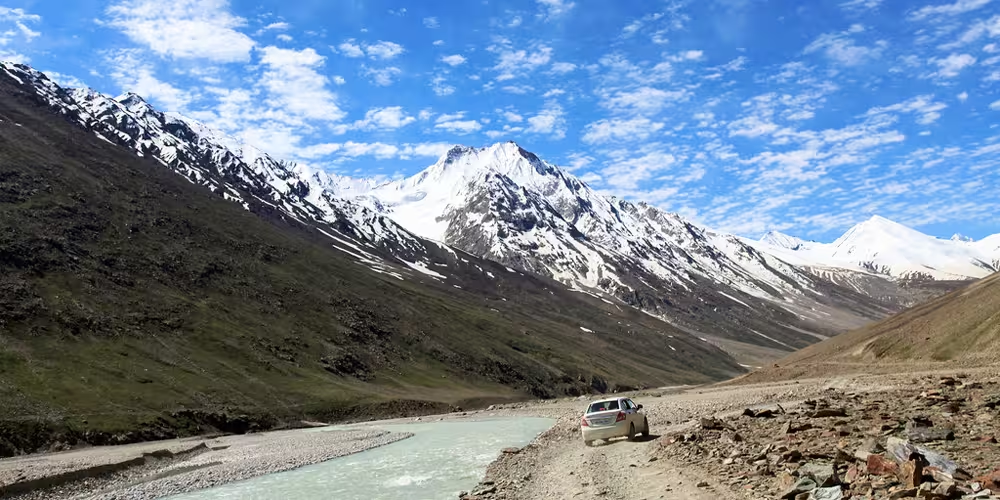
Most travelers pick one of two circuits, and knowing the difference will save you a lot of confusion.
Route 1: Shimla – Kinnaur – Spiti (The Gentler Entry)
This route eases you into altitude gradually, which matters more than people realize.
Shimla → Narkanda → Sarahan → Sangla → Chitkul → Kalpa → Nako → Tabo → Kaza
It follows the Sutlej River for a good stretch, passes through apple orchards in Kinnaur, and gives your body time to adjust before you hit Kaza’s higher elevation. This is generally the safer, more beginner-friendly option for a first-time high-altitude drive.
Route 2: Manali – Kunzum Pass – Spiti (The Adrenaline Route)
Manali → Rohtang/Atal Tunnel → Batal → Chandratal → Kunzum Pass → Losar → Kaza
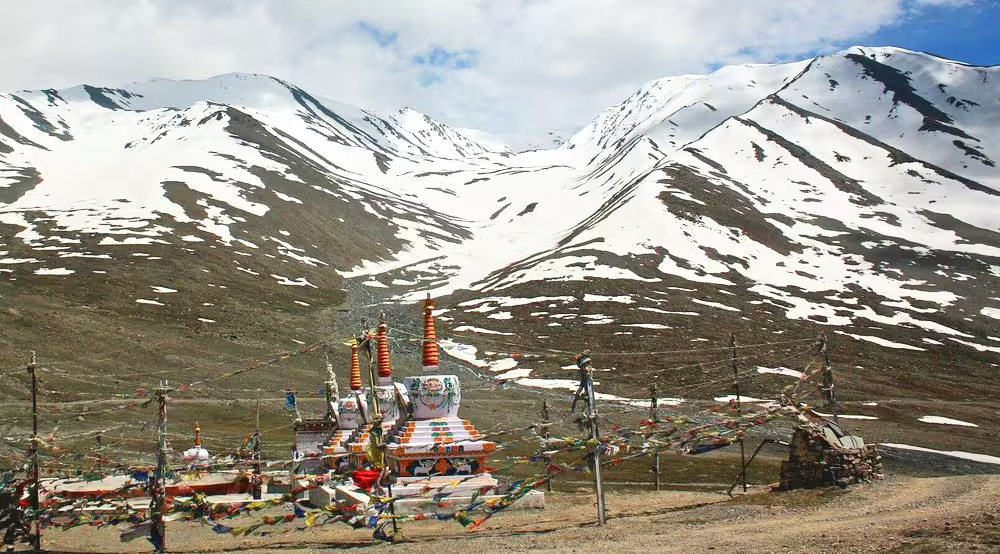
Shorter in distance but far more demanding on both vehicle and driver. Kunzum Pass sits at over 15,000 feet, and the stretch through Batal is notorious for river-water crossings that can swell without warning after rainfall upstream.
Pro tip most guides won’t tell you: doing the loop — entering via Shimla-Kinnaur and exiting via Manali (or vice versa) — is the single best decision you can make. It means you never have to backtrack the same stretch of road twice, and you get gradual acclimatization going in, with the adrenaline route saved for when your body’s already adjusted.
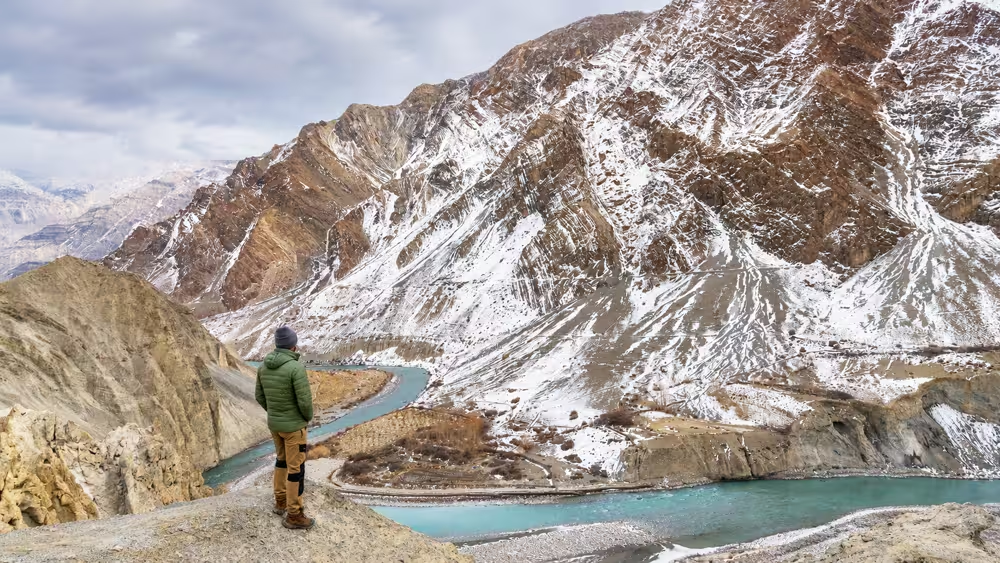
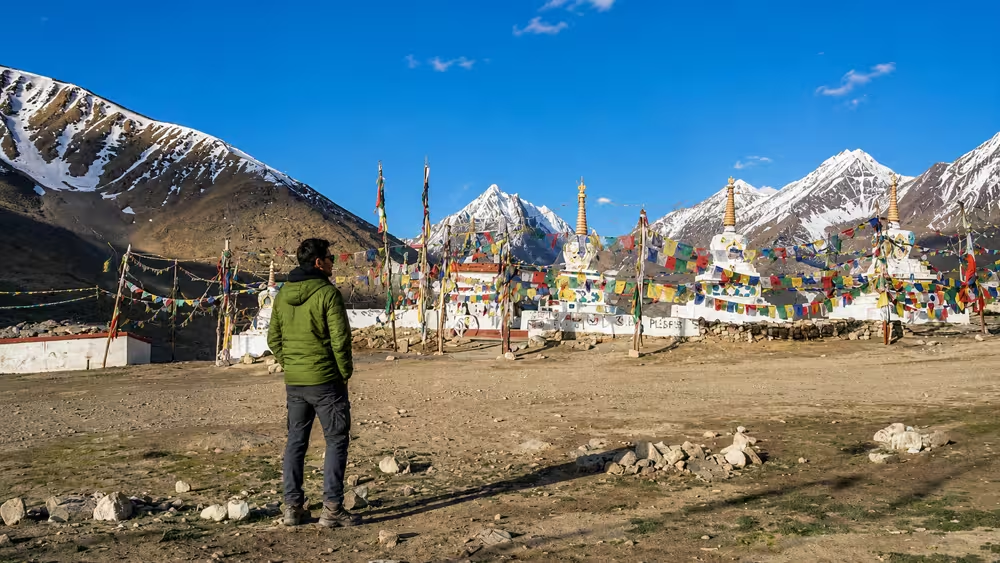
From the road: On my own trip, I started from Delhi and drove up through Manali before crossing into Kunzum and on to Spiti — doing it in four days meant long driving stretches, but the payoff was the Kunzum Valley itself, which genuinely felt like nothing else I’d seen on an Indian road trip. If you’re covering the same Delhi–Manali–Kunzum route, budget extra time around Kunzum Pass specifically, since weather and road conditions there can shift the drive time by hours.
What to Actually Pack for a Spiti Adventure
Forget the generic “carry warm clothes” advice. Here’s what genuinely makes a difference at this altitude:
- Layered clothing, not just heavy jackets — temperatures can swing 20°C between afternoon sun and night
- A basic altitude sickness kit — Diamox (consult your doctor beforehand), and know the early symptoms
- Cash, and lots of it — ATMs are scarce beyond Kaza, and most homestays don’t accept cards
- A physical map or downloaded offline maps — network coverage vanishes for long stretches
- Extra fuel cans — the last reliable pump before Kaza (coming from Manali side) is limited, so fill up whenever you see a station
- Lip balm and sunscreen with high SPF — the UV exposure at this altitude is brutal, even on cloudy days
One thing I wish I’d packed was a power bank. Between using Google Maps, taking photos, and checking travel details throughout the day, my phone battery drained much faster than expected. It’s a small item that can make a big difference during your trip.
Permits and Entry Requirements You Shouldn’t Skip
Indian citizens don’t need a special permit for most of Spiti Valley itself, but foreign nationals require an Inner Line Permit for certain stretches near the Tibet border, including areas around Kaza and villages like Kibber and Chicham.
Permits are typically issued the same day from the SDM office in Kaza, so build in a buffer of a few hours rather than assuming it’s instant.
Hidden Stops Most Itineraries Miss
Everyone talks about Key Monastery and Chandratal, and rightfully so — they’re stunning. But a few spots consistently get overlooked despite being just as worth the detour:
- Chicham Bridge, Asia’s highest suspension bridge connecting Kibber and Chicham villages, with a gorge drop that will genuinely test your nerves
- Dhankar Monastery and Lake, a short but steep hike rewarding you with views over the confluence of the Spiti and Pin rivers
- Langza’s fossil fields, where marine fossils dating back millions of years still turn up in the soil — a quiet reminder this was once ocean floor
- Komic village, often cited as one of the highest motorable villages in the world, with a monastery that rarely sees crowds
Go beyond the popular attractions by exploring lesser-known places like Kakti Village, Sopona Lake, and Mane Village. These peaceful spots are often overlooked in mainstream travel guides but offer beautiful landscapes, local culture, and a quieter experience away from the crowds.
Common Questions About Spiti Valley Road Trips (People Also Ask)
Is Spiti Valley safe for solo travelers?
Yes, Spiti is considered one of the safer regions in Himachal Pradesh for solo travel, including for solo women travelers. Homestays are common, locals are used to independent tourists, and the villages have a close-knit, watchful community feel.
How many days do you need for a Spiti Valley road trip?
A realistic itinerary needs at least 7 to 9 days, including travel time from Shimla or Manali. Rushing this trip in fewer days significantly raises your risk of altitude sickness and means missing the villages that make Spiti worth visiting in the first place. I did my own Delhi–Manali–Kunzum–Spiti loop in four days, and while it worked, it meant long driving days back to back — if you can stretch it to a week or more, you’ll enjoy it with a lot less fatigue.
Do I need a 4×4 vehicle for Spiti Valley?
Not strictly, but it helps considerably on the Manali-Kunzum stretch, especially during or right after rainfall when river crossings get tricky. The Shimla-Kinnaur route is generally manageable in a regular sedan with good ground clearance.
What is the best time to see Chandratal Lake?
Late August to mid-September offers the clearest skies and calmest water for that famous reflection shot, though the lake is technically accessible from June through early October depending on road conditions.
Is there mobile network coverage in Spiti Valley?
Coverage is patchy at best. BSNL has the widest reach, but expect long stretches — sometimes entire days — with zero signal, particularly between Kaza and the more remote villages.
Final Thoughts: Why This Trip Stays With You
There’s a particular kind of quiet in Spiti that’s hard to explain to someone who hasn’t felt it — the kind where a monastery bell carries across an entire valley, and you realize you haven’t heard a car horn in three days. Most adventure trips give you an adrenaline rush and a good story. Spiti gives you both of those things, plus a strange, lingering sense of perspective that tends to follow you home.
Pack light, drive slow, respect the altitude, and give the villages more time than your itinerary probably allows for. This isn’t a destination you check off. It’s one you end up planning your way back to.
About the Author
Ady is a travel writer and road-trip enthusiast who explored Spiti Valley on a self-drive journey from Delhi via Manali and Kunzum Pass between 15 June and 19 June. Road conditions and permit rules may change seasonally, so always verify the latest local updates before your trip.
Related to this topic:

Best Adventure Honeymoon Destinations in India