Top 15 Hidden Gems in South India You Must Visit in 2026
South India is a region of extraordinary geographical diversity. You have the Western Ghats running like a green spine down the west coast. You have the Deccan Plateau holding ancient volcanic secrets. You have 7,500 kilometres of Indian coastline, and a massive chunk of it belongs to South India alone.
According to the Tourism Ministry of India, the southern states of Tamil Nadu, Kerala, Karnataka, Andhra Pradesh, and Telangana collectively received over 200 million domestic tourist visits in 2024. And yet, less than 3% of those tourists ventured beyond the top 20 mainstream destinations.
That means 97% of South India is sitting there, waiting to be explored.
And that is exactly what I want to help you do.
What Makes These “Hidden Destinations”?
These are not entirely unknown; they are marked on the map. But they are places that most travel agencies do not put in their brochures. Places with no luxury hotels, no neon signs, and no souvenir stalls every ten metres.
They are places where locals still look surprised to see a tourist.
And in my experience? Those are always the most magical places of all.
Dzukou Valley – The Valley of Flowers Nobody Talks About
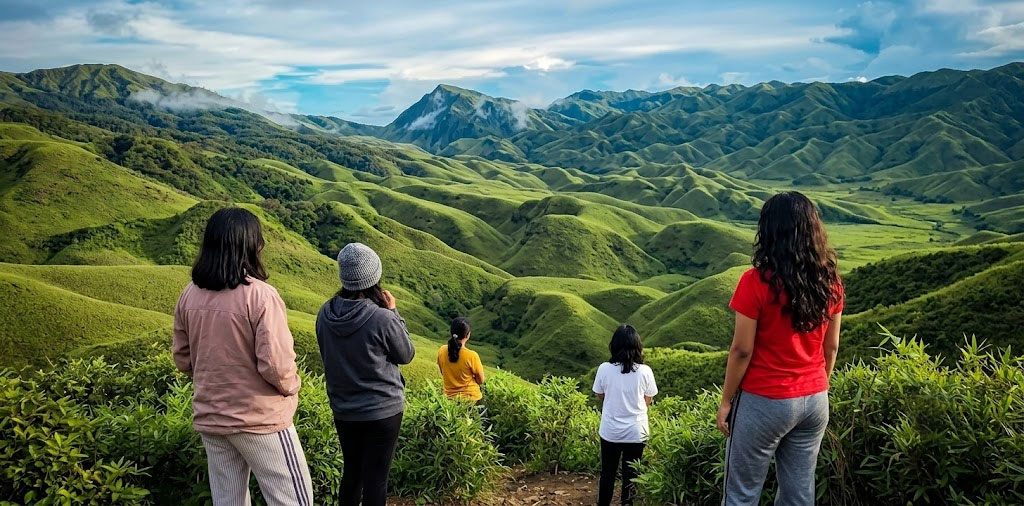
If someone told me I would find one of the most breathtaking valleys in all of India on the border of Nagaland and Manipur, I would have laughed.
But here we are.
Dzukou Valley sits at an altitude of about 2,452 metres and transforms into a carpet of wildflowers from June to September. During winter, it becomes a surreal snow-dusted landscape that barely anyone in the world knows about.
The trek to get here is not for the faint of heart — it is a 3- to 4-hour uphill hike from Viswema village in Nagaland. But when you crest that final ridge and the valley opens up before you like something from a dream, every step is absolutely worth it.
There is a government rest house inside the valley where you can spend the night. Sleeping under a sky full of stars here, with no phone signal and no noise except the wind — it is the kind of experience that resets your soul.
How to Reach Dzukou Valley
- Nearest city: Kohima, Nagaland
- Trek starting point: Viswema village (25 km from Kohima) or Jakhama village
- Trek distance: Approximately 8 km one way
- Best time to visit: June to September for flowers, December to February for snow
- Entry permit: Inner Line Permit (ILP) required for non-Nagaland residents
Practical tip: Carry your own food and water. Facilities are extremely limited inside the valley. A good pair of trekking shoes is non-negotiable.
Shettihalli Rosary Church, Karnataka – A Ruin That Stops Time
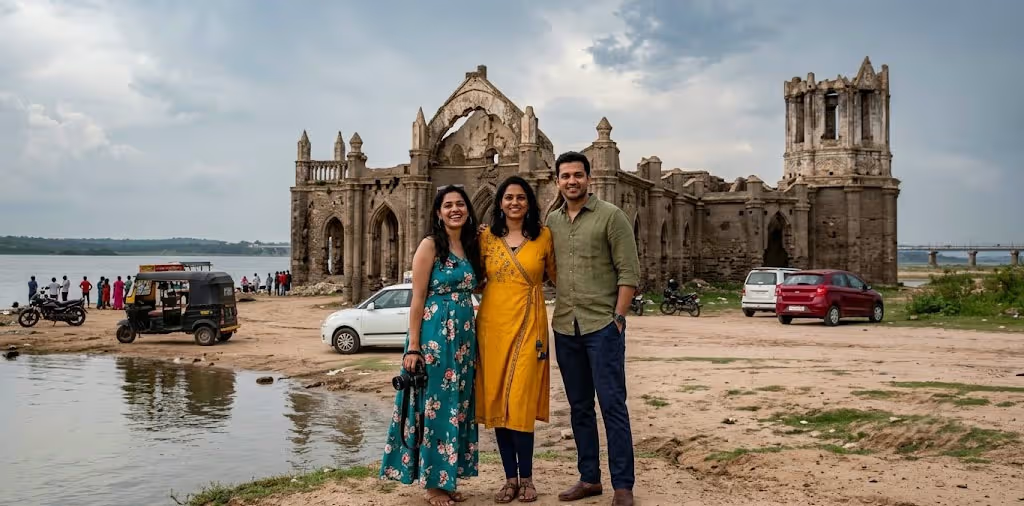
I stumbled across a photograph of Shettihalli Church once and genuinely thought it was a movie set.
It is not.
This is a real 19th-century Gothic-style church built by French missionaries in the 1860s, now partially submerged in the Hemavathi reservoir. Every monsoon season, the waters rise and swallow the ruins. When the waters recede between October and January, the church rises dramatically from the riverbed like a ghost.
Standing inside those crumbling arched walls, with the river still lapping at the mossy stone floor, is one of the most hauntingly beautiful experiences I have ever had in India.
There are no crowds here. No entry fee. No souvenir sellers. Just ruins, water, silence, and an extraordinary sense of history.
How to Reach Shettihalli Church
- Nearest city: Hassan, Karnataka (about 55 km away)
- Distance from Bengaluru: Approximately 180 km
- Best time to visit: October to January when water levels are low
- Getting there: Drive to Gorur village, then take a coracle (round boat) ride across the river — locals will arrange this for a small fee
Practical tip: Visit early morning for the most dramatic photography. The mist on the water combined with the ruined Gothic arches is unlike anything else in South India.
Varkala’s Secret Northern Cliffs, Kerala – Beyond the Backpacker Strip
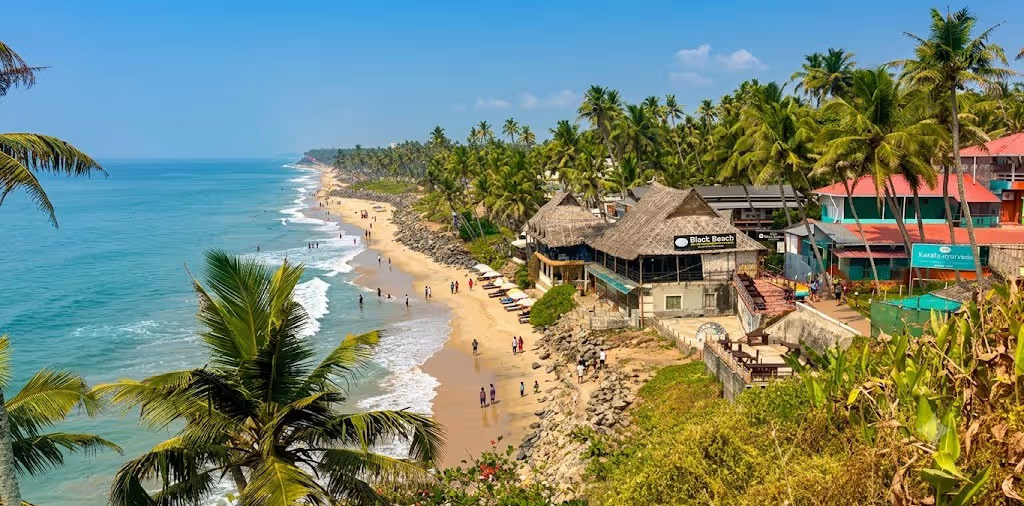
Most people who visit Varkala know the famous clifftop strip — the restaurants, the yoga classes, the busy Papanasam Beach below.
But walk north along the cliff for about 20 minutes and everything changes.
The tourist restaurants disappear. The noise fades. And suddenly you are standing on a red laterite cliff edge, looking down at a completely deserted stretch of golden sand with nobody on it except a few local fishermen hauling in their nets.
I found a small rocky cove here once, accessible only by scrambling carefully down the cliff face. I sat there for two hours and did not see a single other tourist. The water was a shade of turquoise I had never quite seen before.
This is what Kerala actually looks like when you step away from the tourist trail.
What to Know About Varkala’s Secret Coves
- Best time: October to March (avoid monsoon as the sea is very rough)
- How to find them: Simply walk north from Varkala’s main cliff area for 15–25 minutes
- Nearest accommodation: The main Varkala clifftop area
- Caution: The sea currents here can be very strong. Always check conditions before swimming.
Practical tip: Bring your own food and water. There are no restaurants at the northern coves. And absolutely do not miss the sunset from this spot — it is one of the most spectacular I have ever seen.
Gandikota – India’s Own Grand Canyon (And Almost Nobody Goes There)
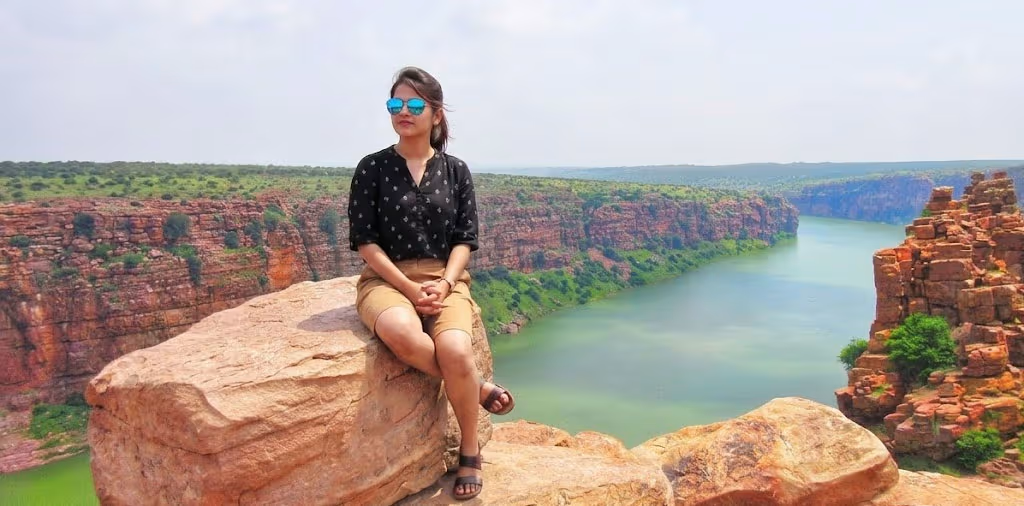
I know what you are thinking. A Grand Canyon in India? Really?
Yes. Really.
Gandikota is a tiny village in Andhra Pradesh’s Kadapa district, sitting on the edge of a dramatic gorge carved by the Pennar River through the Erramala hills. The canyon walls drop sharply to the river below, glowing orange and red in the golden hour light.
There is also a stunning 13th-century fort here — Gandikota Fort — that sits right on the cliff edge with views that will genuinely make your jaw drop.
And yet, in my experience, you will rarely find more than a handful of tourists here on any given day. There is one basic APTDC resort for accommodation, and the nearest town is Jammalamadugu, about 15 km away.
This is raw, dramatic, untouched India. And I absolutely love it for that.
Key Facts About Gandikota
- Location: Kadapa district, Andhra Pradesh
- Distance from Bangalore: Approximately 330 km
- Best time to visit: October to February
- Nearest airport: Kadapa Airport (about 75 km)
- Entry fee: Free
Expert tip: Visit at sunrise. The gorge walls catch the first light in the most extraordinary way, and at that hour, you will almost certainly have the entire place to yourself.
Belum Caves, Andhra Pradesh – An Underground World
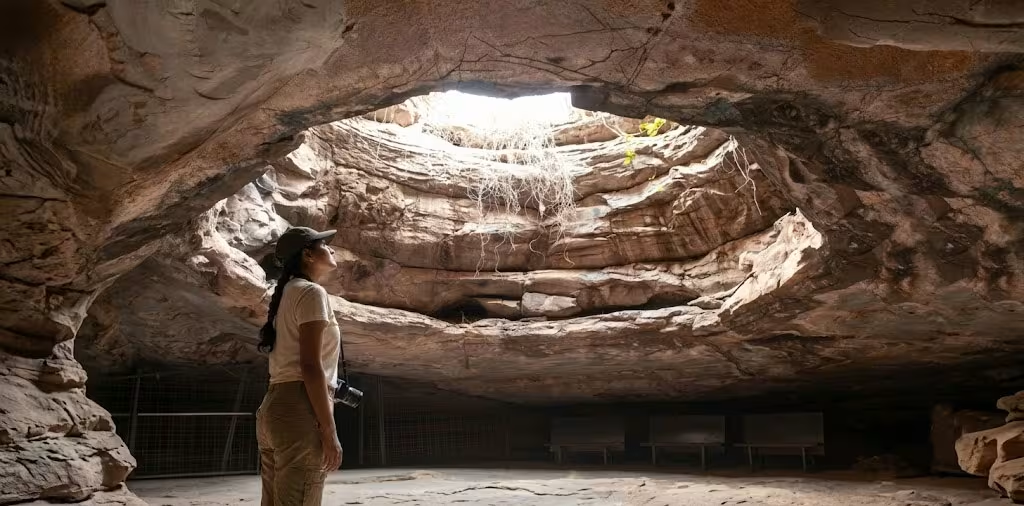
South India hides its magic not just on the surface but also beneath it.
Belum Caves, located in the Kurnool district of Andhra Pradesh, are the second longest caves in the Indian subcontinent, stretching for over 3,229 metres. They were formed over millions of years by the continuous flow of underground water through limestone.
Inside, you will find extraordinary stalactite and stalagmite formations — some of which locals have given wonderfully evocative names like “Shiva’s Hall,” “Meditation Chamber,” and “Patala Ganga” (the underground river).
What genuinely surprised me was the scale of the place. I expected a cramped, dark cave. Instead, I walked through vast cathedral-like chambers that felt otherworldly.
The caves maintain a constant temperature of about 16°C inside, which is a relief if you are visiting during the blistering Andhra summer.
Planning Your Visit to Belum Caves
- Location: Belum village, Kurnool district, Andhra Pradesh
- Distance from Hyderabad: About 300 km
- Best time to visit: October to March
- Entry fee: ₹55 for Indians, ₹320 for foreigners
- Timings: 10 AM to 5 PM daily
Practical tip: Wear comfortable, non-slip footwear. The cave paths can be slippery. The cave is well-lit and guided tours are available in English, Telugu, and Hindi.
Agumbe, Karnataka – Where Monsoon Becomes Magic
Most travellers spend Rajasthan winters. But have you ever considered spending the monsoon season in the Western Ghats?
Agumbe, a tiny village in the Shimoga district of Karnataka, receives some of the heaviest rainfall in India — second only to Cherrapunjee in Meghalaya. Between June and September, it transforms into a landscape of impossible greenery, roaring waterfalls, and swirling mist that makes it look like something from a fantasy novel.
R.K. Narayan’s television adaptation of Malgudi Days was filmed in and around Agumbe, and it is easy to see why. The village itself is a collection of traditional Malnad-style homes, ancient temples, and winding forest paths.
The Agumbe Rainforest Research Station (ARRS) here is one of the few places in India where you can genuinely encounter the King Cobra in its natural habitat — the forest around Agumbe has one of the highest densities of King Cobras in the world.
What to Do in Agumbe
- Watch the sunset: Sunset Point in Agumbe is legendary. The sun sets over the Arabian Sea through layers of green hills and cloud — breathtaking.
- Trek to Barkana Falls: At 259 metres, Barkana is one of the tallest waterfalls in India and is virtually unknown outside Karnataka.
- Visit Onake Abbi Falls: A short 2 km trek through dense jungle leads to this dramatic, rarely visited waterfall.
Best time to visit: June to September for monsoon magic, October to November for clear views and green landscapes.
How to reach: Agumbe is about 95 km from Mangaluru and 340 km from Bengaluru.
- Thalassery, Kerala – The Forgotten Spice Coast Town
Kerala has been on the tourist map for decades. But most people only know about Kochi, Munnar, Alleppey, and Wayanad.
Thalassery (also called Tellicherry) is a small coastal town in northern Kerala that most tourists drive straight through on their way to somewhere else. And that, in my opinion, is a massive mistake.
This town is soaked in history. It was one of the key trading ports for the British East India Company in the 18th century, and the legacy of that era is visible everywhere — in the crumbling British fort perched on a rocky island just off the coast, in the magnificent 200-year-old pier, and in the unique Moplah Muslim architecture of the old town mosques.
But more than the history, Thalassery is famous for its food. This is the home of the legendary Thalassery Biryani — a distinct style of biryani made with Khaima rice and a specific blend of spices that is absolutely different from anything you have tasted elsewhere.
I ate four plates in two days. I am not embarrassed about this at all.
Why Thalassery Should Be on Your Kerala Itinerary
- Thalassery Fort: Built in 1708 by the British East India Company, this laterite stone fort sits dramatically on a small rocky promontory over the sea.
- Muzhappilangad Drive-in Beach: Just 6 km from Thalassery, this is Asia’s longest drive-in beach at 4 km. And somehow, it is almost always quiet.
- Kannur Weaving Villages: Just 30 km from Thalassery, the traditional handloom weavers of Kannur produce some of the most beautiful fabrics in India.
How to reach: Thalassery has its own railway station on the Shoranur–Mangaluru rail line. It is about 70 km from Calicut Airport.
- Gingee Fort, Tamil Nadu – The Troy of the East
I have stood inside a lot of forts across India. Amber Fort, Mehrangarh, Chittorgarh — all magnificent in their own right.
But Gingee Fort in Tamil Nadu’s Villupuram district genuinely stopped me in my tracks.
The Mughal Emperor Aurangzeb himself called it the “Troy of the East.” And when you see it, you will immediately understand why.
Gingee is not just one fort — it is actually a complex of three separate hilltop forts spread across three different hills: Rajagiri, Krishnagiri, and Chakkilidrug. The entire fortified complex covers over 11 square kilometres and dates back to the 9th century, though much of what you see today was built during the Vijayanagara Empire in the 15th and 16th centuries.
What makes Gingee truly extraordinary is how completely forgotten it feels.
On the day I visited, I counted fewer than 30 tourists in the entire complex. The ticket office looked like it was staffed by someone who had not expected visitors in several weeks. The main citadel on Rajagiri Hill requires a steep, breathless climb — but at the top, you are rewarded with panoramic views of the Tamil Nadu plains stretching endlessly in every direction.
And at the very summit sits an audience hall, a granary, and a temple — all still standing, all largely unrestored, all quietly magnificent.
This is not a polished tourist destination. It is raw, rugged history. And I loved every single second of it.
What to Explore at Gingee Fort
- Rajagiri Hill:The tallest of the three hills at 160 metres. The main citadel, granary, and audience hall are here. The climb is steep but absolutely worth it.
- Venkataramana Temple:A beautifully carved Vijayanagara-era temple inside the fort complex — largely overlooked by visitors.
- The Queen’s Palace (Ranee’s Tank):A fascinating royal bathing tank with carved stone steps descending into the water.
- Krishnagiri Fort:A separate hill fort that offers different views of the complex and is less visited than Rajagiri.
How to Reach Gingee Fort
- Location: Gingee, Villupuram district, Tamil Nadu
- Distance from Chennai: About 160 km (roughly 3 hours by road)
- Distance from Pondicherry: Just 65 km — making it a perfect day trip
- Nearest railway station: Tindivanam (about 35 km away)
- Entry fee:₹15 for Indians, ₹200 for foreigners
- Timings:9 AM to 5 PM, closed on Fridays
Practical tip: Wear sturdy shoes and carry at least 2 litres of water per person. The climb to Rajagiri is exhausting in the South Indian heat. Start your visit by 8 AM to beat both the heat and the (very small) crowds. Sunrise here is absolutely magical.
- Nelliyampathy Hills, Kerala – The Munnar Nobody Knows About
Everyone has heard of Munnar. But ask most people about Nelliyampathy, and you will get a blank look.
And honestly? That is exactly what makes it so special.
Nelliyampathy is a hill station in the Palakkad district of Kerala, sitting at an altitude of around 1,572 metres. It is covered in a patchwork of tea, coffee, cardamom, and orange plantations. The air is cool and sharp. The roads are quiet. The views are absolutely staggering.
Unlike Munnar, which now receives hundreds of thousands of tourists every season, Nelliyampathy has managed to stay genuinely offbeat. There are no souvenir shops every 50 metres. No traffic jams on winding mountain roads. No tour buses.
What you do get is silence. Real, deep, forest silence.
The drive up to Nelliyampathy itself is an experience — 13 hairpin bends through dense jungle, with occasional glimpses of the Palakkad plains far below. I genuinely held my breath on a few of those turns.
What to Do in Nelliyampathy
- Pothundi Reservoir:A serene reservoir surrounded by hills — the reflection of the mountains in the still water is extraordinary, especially in the early morning.
- Seetharkundu Viewpoint:Offers a sweeping view of the Palakkad plains below — on a clear day, you can see for what feels like forever.
- Kesavan’s Para:A rocky ledge viewpoint that hangs over the valley — not signposted, but locals will show you the way. Utterly dramatic.
- Orange, Coffee, and Cardamom Plantations:You can walk through these freely, and the fragrance of fresh cardamom in the air is something I still think about.
How to Reach Nelliyampathy
- Nearest city:Palakkad (about 65 km)
- Nearest airport:Coimbatore International Airport (about 90 km)
- Best time to visit:September to March
- Road note:The road to Nelliyampathy has 13 hairpin bends and is not suitable for large vehicles. Hire a local jeep or a small car.
Expert tip: Stay the night if you possibly can. The sunrise over the Palakkad plains, viewed from the hills, is one of the most breathtaking things I have ever witnessed in Kerala. There are a handful of homestays and plantation bungalows that offer this experience beautifully.
- Kolli Hills, Tamil Nadu – The Mountains of Death (That Are Actually Paradise)
Yes, the name is dramatic. No, I am not exaggerating.
Kolli Hills — also known as Kolli Malai or the Mountains of Death — earned that ominous name from the 70 hairpin bends you must navigate to reach them. The roads are steep, the drops are sheer, and the views are vertigo-inducing.
But once you are up there? Pure paradise.
Located in the Namakkal district of Tamil Nadu, Kolli Hills sits at around 1,300 metres above sea level. The entire range is blanketed in thick forest, and the mist that rolls through in the early morning makes it look almost supernatural.
Most people have never heard of Kolli Hills. And those who have either write it off as “too hard to reach” or assume there is nothing much to see. Both assumptions are wrong.
What Makes Kolli Hills Worth the Journey
- Arapaleeswarar Temple:An ancient and deeply revered Shiva temple at the heart of the hills. Pilgrims make the 70-bend journey here every day — which tells you something about how special this place is.
- Agaya Gangai Waterfall:One of the finest waterfalls in Tamil Nadu, tumbling dramatically through dense forest. The short trek to reach it winds through lush greenery and is genuinely beautiful.
- Siddhar Caves:These are ancient meditation caves once used by siddha yogis. The atmosphere inside is deeply atmospheric — cool, silent, and charged with a strange energy that is hard to describe.
- Selur Forest Area:A dense patch of forest where you can walk almost entirely alone through ancient trees and flowering plants. I did not see another person for two hours here.
How to Reach Kolli Hills
- Nearest town:Rasipuram, Namakkal district, Tamil Nadu
- Distance from Salem:About 70 km
- Distance from Chennai:About 320 km
- Best time to visit:October to February
- Road note:The 70 hairpin bends are manageable in a car or on a motorbike. Take it slowly and enjoy the journey — it is part of the experience.
Practical tip: Fill up your petrol tank before you start the ascent. There are very limited fuel stations on the hills. Also, mobile phone signal is patchy at best — download offline maps before you go.
- Nishani Motte, Karnataka – A Secret Trek That Will Blow Your Mind
If you are a trekker, you need to know about Nishani Motte.
Located in the Kodagu (Coorg) district of Karnataka, Nishani Motte is a grassland hilltop at around 1,670 metres that offers some of the most jaw-dropping panoramic views in all of South India. On a clear day, you can see Tadiandamol (the highest peak in Coorg), Pushpagiri, and even the distant plains stretching towards the coast.
What I love about this trek is how wild and raw it feels.
There are no organised tour groups here. No laminated boards telling you where to walk. Just a forest path that winds through thick shola forest, then opens dramatically onto the open grassy summit — and suddenly the whole world is laid out at your feet.
The trek starts from Virajpet or Kannur (Karnataka, not the Kerala town) and takes about 3 to 4 hours one way. The forest section can be quite disorienting, so it is absolutely essential to go with a local guide.
Nishani Motte Trek — What to Know
- Location:Kodagu district, Karnataka
- Trek difficulty:Moderate to difficult
- Trek duration:3–4 hours one way
- Best time:October to February (avoid monsoon — leeches and slippery paths)
- Permit:Required from the forest department — arrange through a local guide in Virajpet
- Starting point:Nishani village, near Virajpet
Expert tip: Start the trek by 5 AM to reach the summit for sunrise. The light on the surrounding hills at golden hour is extraordinary and worth every ounce of effort to get up that early.
- Thenmala, Kerala – India’s First Planned Ecotourism Destination
I stumbled across Thenmala almost by accident, on my way between Kollam and Shencottah.
And I am so glad I stopped.
Thenmala, in the Kollam district of Kerala, is officially recognised as India’s first planned ecotourism destination. It sits at the edge of the Shendurney Wildlife Sanctuary and is surrounded by dense forest, waterfalls, and the Kallada River.
What I found here was a thoughtfully developed destination that has somehow managed to avoid the mass-tourism trap. There are bamboo bridges over the river, forest walking trails, a sculpture garden in the middle of the jungle, a suspension bridge, and a deer rehabilitation centre.
It felt like a place that genuinely cared about the environment — and about the experience of the visitor.
The Kallada River here is also a popular white-water rafting spot from June to September. And for those who want something gentler, there are pedal boats on the reservoir that offer peaceful views of the surrounding hills.
What to Do in Thenmala
- Palaruvi Waterfall:About 20 km from Thenmala, this is a stunning 91-metre waterfall that is far less visited than other Kerala falls. The water is believed to have medicinal properties by locals.
- Shendurney Wildlife Sanctuary:Home to elephants, tigers, leopards, sambar deer, and the rare Lion-tailed Macaque. Jeep safaris can be arranged through the forest department.
- Kallada River Trekking:A guided riverside trek through the forest along the banks of the Kallada — one of the most peaceful and beautiful walks I have done in Kerala.
- Edakallu Suspension Bridge:A simple but dramatic rope bridge over the river, surrounded entirely by jungle on both sides.
How to Reach Thenmala
- Nearest city:Kollam (about 70 km)
- Nearest railway station:Punalur (about 22 km)
- Best time to visit:September to February
- Nearest airport:Trivandrum International Airport (about 100 km)
Practical tip: Book your forest safari well in advance through the Kerala Forest Department website, especially during peak season (November to January). Safaris are limited per day to protect the wildlife.
- Chandrala Parambu, Kerala – A Hidden Bamboo Forest
I almost did not include this one because I worry about what happens to a magical place when too many people find out about it.
But then I thought — if you are reading this guide, you are probably the kind of traveller who will respect it.
Chandrala Parambu is a hidden bamboo forest and meadow near Palakkad in Kerala. It is a landscape unlike almost anything else in South India — rolling grassland meadows surrounded by dense bamboo groves, with the Western Ghats forming a dramatic backdrop.
The light here in the late afternoon turns the bamboo and grass a rich, warm gold. It is genuinely one of the most photogenic places I have ever been in India.
There is no formal tourist infrastructure here. No entry gate. No parking lot. You reach it via a rough forest track, and that is precisely what keeps it special.
The nearest point of reference is the Nelliyampathy road out of Palakkad. A local guide is strongly recommended — both to find the place and to ensure you are not unknowingly entering restricted forest territory.
Important Note on Visiting Chandrala Parambu
- Go with a local guide:This is not optional. The area borders protected forest, and without local knowledge, it is easy to get lost.
- Best time:October to February for clear skies and dry ground
- Photography:The golden hour light here is extraordinary — plan your visit accordingly
- Carry out all rubbish:This place has no waste management. Leave it exactly as you found it.
- Maredumilli, Andhra Pradesh – A Forest Village at the Edge of the World
Deep in the East Godavari district of Andhra Pradesh, where the Eastern Ghats meet the Godavari River’s tributaries, there is a place called Maredumilli.
Most people in Andhra Pradesh itself have barely heard of it.
Maredumilli is a small forest village surrounded by thick tropical jungle, waterfalls, and tribal settlements. It sits inside the Papikondalu Wildlife Sanctuary, which covers over 1,000 square kilometres of protected forest along the Godavari gorge.
The Godavari gorge here is, in my honest opinion, one of the most underrated natural landscapes in all of India. The river cuts through ancient hills draped in dense forest, and the boat rides through this gorge are among the most scenic journeys I have taken anywhere in Asia.
What Makes Maredumilli Special
- Jalatarangini Waterfalls:A series of small, beautiful waterfalls hidden within the forest around Maredumilli. You reach them by trekking through dense jungle — and the journey is as beautiful as the destination.
- Tribal Village Visits:The Koya and Kondareddi tribes live in the villages around Maredumilli. Some organised ecotourism programmes allow respectful cultural visits — these are among the most eye-opening and humbling travel experiences you can have in South India.
- Godavari Gorge Boat Ride:From Papikonda, a motorboat ride through the Godavari gorge is absolutely unmissable. The sheer walls of the gorge, the emerald river, and the total silence — broken only by the sound of the boat’s engine — is otherworldly.
- Birdwatching:The forests around Maredumilli are home to over 200 species of birds, including several endemic species of the Eastern Ghats. This is genuinely one of the best birdwatching destinations in South India.
How to Reach Maredumilli
- Nearest major city:Rajahmundry, Andhra Pradesh (about 100 km)
- Nearest airport:Rajahmundry Airport
- Best time to visit:October to February
- Accommodation:A small Jungle Camps eco-resort and a few forest department bungalows are available — book well in advance
Practical tip: The roads to Maredumilli are rough and forest tracks can be impassable during heavy rain. Go between October and January for the best road conditions and the most comfortable weather.
- Lonar Crater Lake, Maharashtra Border (Deccan Region) – Where a Meteorite Created Magic
Technically Lonar Crater Lake sits in Maharashtra, but it sits at the very cultural crossroads of the Deccan Plateau — that vast highland region shared between Maharashtra, Telangana, and Karnataka. And given its extraordinary geological and historical significance, no hidden South India guide would be complete without it.
About 50,000 years ago, a massive meteorite slammed into the Deccan basalt rock of central India and created one of the most extraordinary natural features on the planet.
Today, that impact crater is 1.8 kilometres wide and 150 metres deep — and the lake that now fills it is one of only four hyper-saline alkaline lakes in the entire world.
The water of Lonar Lake has a pH of around 10.5. It is green. It is slightly fizzy at the edges. And it is surrounded by ancient temples — some of which are partly submerged in the lake’s rising waters.
When I stood at the crater rim and looked down at that strange green water surrounded by forest, with crumbling temples dotting the shoreline, I felt like I had genuinely stumbled onto another planet.
The flamingos that gather here in certain seasons only add to the completely otherworldly atmosphere.
Why Lonar Is Worth the Journey
- Lonar Wildlife Sanctuary: The crater rim and its surrounding area form part of a wildlife sanctuary home to peacocks, jackals, spotted deer, and extraordinary birdlife.
- Ancient Temples at the Lakeside: There are over a dozen ancient temples around the crater lake, including the Daitya Sudan Temple dedicated to Lord Vishnu — beautifully carved and surprisingly well preserved.
- Unique Scientific Significance: Lonar is one of only four known hyper-saline, alkaline impact lakes in the world. Scientists from institutions including NASA have come here to study it as an analogue for Mars.
- Flamingo Season: Between November and February, flamingos arrive at the lake in significant numbers, turning sections of the shoreline pink.
How to Reach Lonar
- Location: Buldhana district, Maharashtra (Deccan region)
- Distance from Aurangabad: About 140 km
- Distance from Hyderabad: About 430 km
- Nearest railway station: Jalna (about 85 km) or Aurangabad
- Best time to visit: October to March
- Entry fee: ₹50 per person
Practical tip: There is a Maharashtra Tourism guesthouse near the lake for overnight stays — book well in advance. Wake up early and walk down to the crater rim at sunrise. The mist over the green water at dawn is something I genuinely cannot put into words.
Practical Tips for Visiting Hidden Locations in South India
Now that I have given you the list, let me share everything I have learned about actually making these trips happen. Because visiting offbeat destinations in South India is genuinely different from visiting well-trodden tourist spots — and a little preparation goes a long way.
Plan Further in Advance Than You Think
Hidden places often have very limited accommodation. Forest department bungalows, tribal homestays, and small eco-resorts have only a handful of rooms. During peak season (October to February), these book out weeks or even months in advance.
Do not assume you can just show up. You often cannot.
Always Carry Cash
Most of these locations have no ATMs nearby. Some do not even have mobile internet signal. Carry enough cash for at least 3 to 4 days of expenses before you venture off the beaten track.
In my experience, ₹5,000 to ₹10,000 in cash is a sensible minimum for a 3-day offbeat trip.
Download Offline Maps Before You Go
Google Maps works beautifully in cities. In the Western Ghats, the Eastern Ghats, and remote forest areas? Not so much.
Download the offline map for your entire region before you leave civilisation. Apps like Maps.me and OsmAnd work exceptionally well for offline forest navigation.
Trust me on this one. I have been lost in the Western Ghats without signal. It is not as romantic as it sounds.
Hire Local Guides — Always
For most of the places on this list, a local guide is not just helpful. It is essential.
Local guides know the forest paths, speak the tribal languages, know which temples are accessible and which are not, and can arrange everything from boat rides to homestay meals.
They also, crucially, keep you safe in areas where wildlife is active.
The going rate for a local guide in South India’s forested areas is typically ₹500 to ₹1,500 per day. It is money extremely well spent.
Respect the Local Communities and Environment
This is the most important tip of all.
When you visit a place that barely sees tourists, you carry enormous responsibility. How you behave will directly shape whether that community welcomes future travellers or not.
- Ask permission before photographing locals, especially in tribal villages
- Do not litter. Carry a bag for your waste and bring it out with you
- Do not pick wildflowers or disturb wildlife
- Support local businesses — eat at the local dhaba, buy handicrafts directly from the artisan
- Dress modestly in temple areas and traditional communities
Best Time to Visit Hidden Places in South India
| Season | Months | What to Expect |
| Post-monsoon | October – November | Lush green landscapes, waterfalls in full flow, mild temperatures |
| Winter | December – February | Best overall weather, clear skies, ideal for trekking and wildlife |
| Spring | March – April | Warmer, quieter crowds, good for hill stations |
| Monsoon | June – September | Dramatic landscapes, some roads impassable, best for Agumbe and waterfall lovers |
| Summer | April – May | Very hot in plains and Deccan, but hill stations remain pleasant |
My personal recommendation: October to January is the sweet spot for visiting most hidden locations in South India. The monsoon has cleared, the landscapes are green and lush, temperatures are comfortable, and the light is extraordinary for photography.
Getting Around South India for Offbeat Travel
- Self-drive: The most flexible option. Zoomcar and Revv operate in most South Indian cities. A self-drive lets you stop wherever you want and explore at your own pace.
- Hired car with driver: If you prefer not to drive, hiring a local driver who knows the region is invaluable. They often know shortcuts, hidden spots, and local eateries that no guidebook mentions.
- Motorbike: For solo travellers, renting a Royal Enfield or a smaller bike is one of the best ways to explore South India’s back roads. Just ensure you have the correct licence.
- Trains: South India has an excellent railway network connecting all major cities. For the final leg to truly remote areas, a local bus or hired auto-rickshaw is often the only option.
Key Takeaways
Before you go, here is a quick summary of everything important:
✦ South India’s hidden places are genuinely extraordinary — from volcanic crater lakes to Gothic church ruins submerged in rivers, the diversity is staggering.
✦ The best time to visit is October to February — comfortable weather, clear skies, and green post-monsoon landscapes.
✦ Always book accommodation well in advance — hidden destinations have very limited rooms, and they fill up fast.
✦ Carry cash — ATMs are rare in remote areas.
✦ Download offline maps — mobile signal is unreliable in forest and hill areas.
✦ Hire local guides — they make the trip safer, richer, and far more rewarding.
✦ Travel responsibly — these places are magical precisely because they are unspoiled. Keep them that way.
Expert Tips for Finding Your Own Hidden Gems in South India
Beyond the places I have listed here, South India has hundreds more secrets waiting to be discovered. Here is how I find them:
Talk to locals. The best tips I have ever received have come from a chai shop conversation or a chance encounter at a bus stand. Ask locals where they go on their holidays. The answers will surprise you.
Look at the edges of national parks. The areas just outside major wildlife sanctuaries often have extraordinary landscapes, birdlife, and tribal culture — without the formal entry fees and crowds of the park itself.
Follow the rivers. South India’s rivers — the Godavari, the Krishna, the Cauvery, the Periyar — pass through some of the most dramatic and least visited landscapes in the country. Follow them upstream and see where they lead.
Trust the difficult roads. The places that are hardest to reach are almost always the most rewarding. If a road looks rough and uninviting on Google Maps, there is a good chance something beautiful is at the end of it.
Travel in the shoulder season. October and early March are when you get the best of South India — comfortable weather, without the absolute peak-season crowds.
FAQs
- What are the most hidden locations in South India that are worth visiting in 2026?
Some of the most extraordinary hidden locations in South India in 2026 include Gandikota in Andhra Pradesh (India’s answer to the Grand Canyon), Shettihalli Rosary Church in Karnataka (a submerged Gothic ruin), Nelliyampathy Hills in Kerala (the quiet alternative to Munnar), Gingee Fort in Tamil Nadu (a vast and almost forgotten medieval fort complex), and Dzukou Valley on the Nagaland-Manipur border (a breathtaking high-altitude valley of wildflowers). Each offers a genuinely unique experience far removed from the standard South India tourist trail.
- Which unexplored places in South India are best for trekking?
For trekking, the top unexplored destinations in South India are Dzukou Valley (Nagaland-Manipur border) for high-altitude meadows, Nishani Motte in Coorg for panoramic grassland ridges, Kolli Hills in Tamil Nadu for a dramatic 70-hairpin ascent, Agumbe in Karnataka for monsoon waterfall treks, and Maredumilli in Andhra Pradesh for riverside jungle walks. All are significantly less crowded than mainstream trekking destinations like Munnar or Coorg town.
- When is the best time to visit hidden places in South India?
The best time to visit most hidden locations in South India is between October and February. During this period, the monsoon has ended, landscapes are still lush and green, temperatures are comfortable for outdoor activities, and wildlife is most active. For monsoon-specific destinations like Agumbe and Barkana Falls, June to September offers the most dramatic experience — though some roads may be challenging.
- Are these offbeat destinations in South India safe for solo travellers?
Yes, the vast majority of hidden locations in South India are perfectly safe for solo travellers — including solo female travellers — with some basic precautions. Always inform someone of your itinerary, hire a local guide for forest and tribal areas, avoid trekking alone in wildlife-active zones, and download offline maps before departing. South India as a whole has a reputation for being among the safer regions in India for independent travellers.
- What are some hidden beach destinations in South India?
Beyond the famous beaches of Goa and Kovalam, South India has extraordinary hidden coastal gems. Muzhappilangad in Kerala is Asia’s longest drive-in beach and is rarely crowded. Varkala’s northern coves offer deserted sand and dramatic red cliffs. Dhanushkodi in Tamil Nadu — a ghost town at the very tip of India — has raw, wild beaches with almost no infrastructure. Kumta and Gokarna’s Om Beach area in Karnataka have several coves accessible only by boat or foot, which remain beautifully quiet.
- Are there hidden wildlife destinations in South India apart from the famous national parks?
Absolutely. South India has several underrated wildlife destinations beyond Bandipur and Periyar. Maredumilli in Andhra Pradesh offers jungle experiences with minimal crowds. Shendurney Wildlife Sanctuary near Thenmala in Kerala has elephants, tigers, and the rare Lion-tailed Macaque without the tourist pressure of Periyar. Papikondalu Wildlife Sanctuary along the Godavari gorge in Andhra Pradesh is one of the most scenically dramatic wildlife areas in the country. The Kalakad-Mundanthurai Tiger Reserve in Tamil Nadu is the largest tiger reserve in South India and remains remarkably little-visited.
- How do I plan a trip to offbeat places in South India without a tour operator?
Planning an independent offbeat trip in South India is absolutely possible with a little preparation. Start by identifying your destination and researching accommodation options — forest department bungalows, homestays, and small eco-resorts are your best options. Book accommodation 4–6 weeks in advance for peak season. Download offline maps. Arrange transport — either self-drive, hired car with driver, or train plus local taxi. And most importantly, connect with a local guide on the ground through travel forums, Google reviews of local operators, or recommendations from the accommodation itself.
- What are the best hidden waterfalls in South India?
South India is home to some absolutely extraordinary and little-known waterfalls. Barkana Falls in Agumbe, Karnataka (259 metres tall) is one of the tallest in India and barely visited. Iruppu Falls on the Karnataka-Kerala border are beautiful and relatively crowd-free. Palaruvi Falls near Thenmala in Kerala is a lovely 91-metre cascade in a forested setting. Agaya Gangai Falls in Kolli Hills, Tamil Nadu is a dramatic waterfall accessible via a forest trek. And Onake Abbi Falls near Agumbe is a hidden gem reachable only by a short jungle path.
Is South India’s Hidden Side Worth Exploring?
Without a single doubt.
The famous places — the Kerala backwaters, the Mysore Palace, the Meenakshi Temple — are magnificent for good reason. I would never tell you to skip them.
But if you have already seen those highlights, or if you are the kind of traveller who wants to go a little deeper, look a little harder, and find the version of a place that most people miss — South India will reward you beyond anything you can imagine.
I have never returned from a journey to South India’s offbeat places feeling anything other than completely humbled and completely alive.
The hidden locations in South India are not just places on a map. They are experiences that will change how you see the world. And that, I think, is the greatest thing travel can do for any of us.
Related to this topic:
20 Beautiful Hill Stations in India Other Than Manali and Shimla
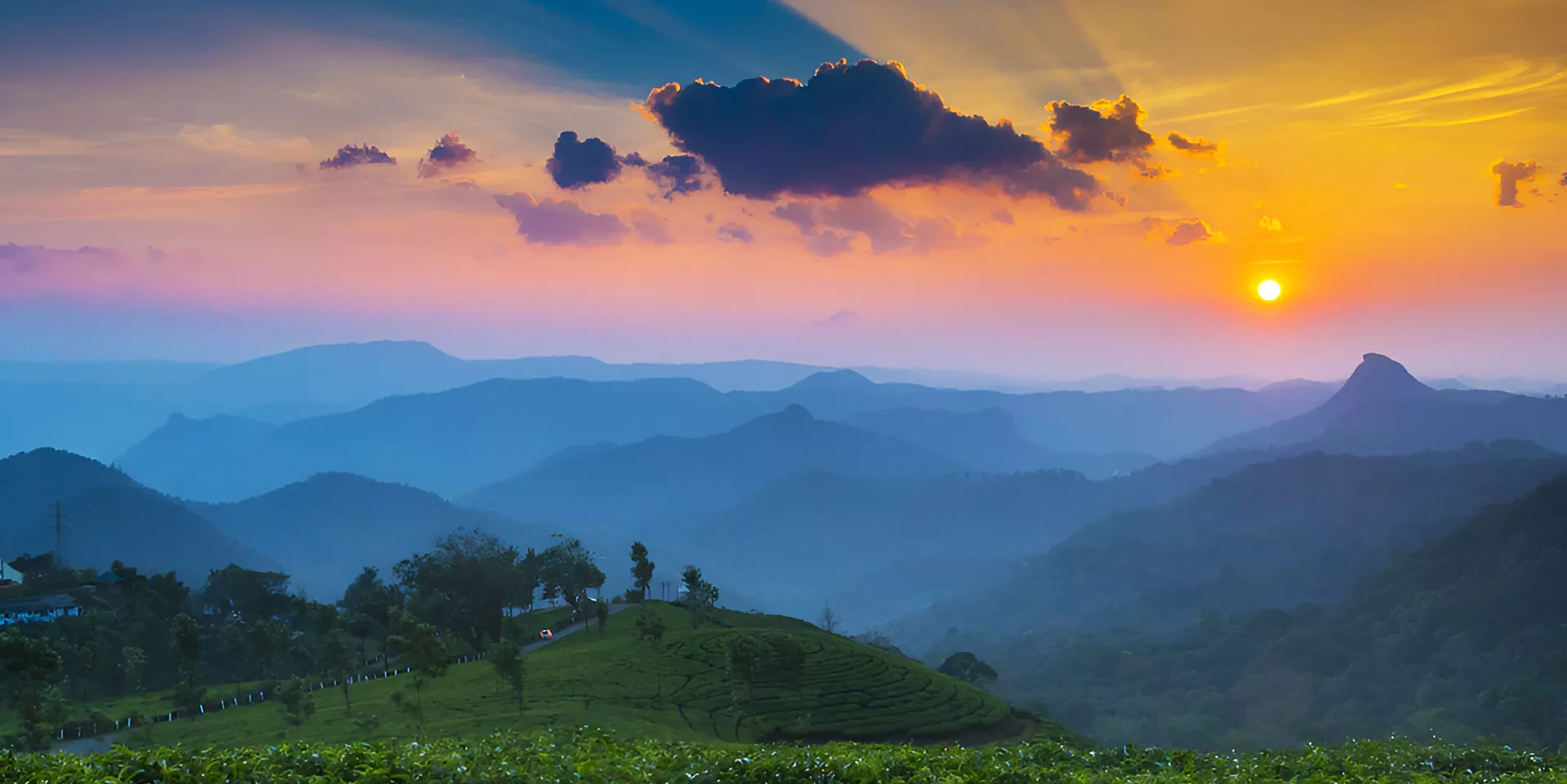
Best Tourist Places in Munnar You Must Visit